



An option is a depreciating asset by design: every day it carries a little less possibility, and its price says so. Theta is the meter running on that possibility — who pays it, who collects it, why it accelerates into expiration, and what all that melting does to the markets around it. Episode 4 of our Greeks series.

The one Greek that never surprises you
Delta told you how fast the option moves (Episode 2). Gamma told you how fast that answer changes (Episode 3). Both depend on what the market does next. Theta is different: it’s the one Greek that shows up whether the market moves or not.
Theta measures how much value an option loses per day, everything else unchanged. If your call is worth 42.00 today with a theta of −0.45, tomorrow — same index level, same volatility — it’s worth about 41.55. Nothing went wrong. Nothing happened, and that’s exactly the point: nothing happening is what the buyer is paying for the right to avoid.
We’ve called theta “the rent” since Episode 1, and the metaphor is precise. An option is a claim on possibility — the possibility that price ends up somewhere interesting before a deadline. Possibility with a deadline is a wasting resource. The rent is the price of occupying it for one more day.
Where the melt actually happens
An option’s price has two layers, and only one of them melts. Intrinsic value is what the option would be worth if it expired right now — how far it’s in the money. Price can move it; time cannot. Time value is everything above that: the premium the market charges for what could still happen before expiry. That layer is the possibility — and that layer is what theta eats. At expiration, time value is exactly zero, always: whatever survives is intrinsic only.
That’s why theta hits hardest at the money. There, the option is all time value — its entire price is possibility, no certainty inside. Deep in-the-money options are mostly intrinsic (little to melt); deep out-of-the-money options have already melted (little left). The rent is highest exactly where the outcome is most undecided — which, if you remember where gamma lives, should sound familiar. Same address.
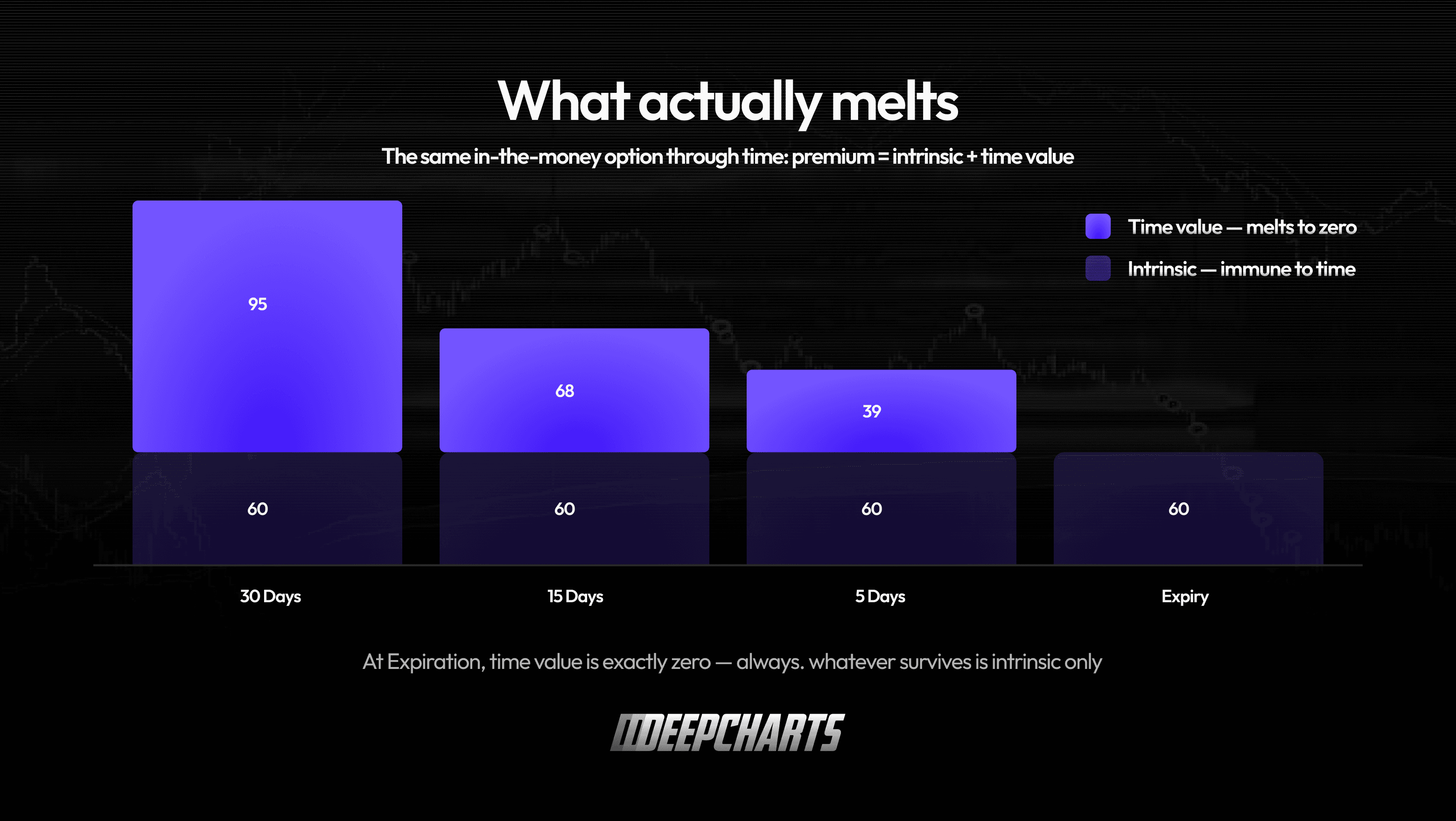
Figure 1 · What actually melts
Slow, then all at once
Decay is not a straight line. An at-the-money option with 30 days to live does not lose 1/30th of its time value each day. It loses politely at first, then faster, then — in the final days — the floor gives way. Roughly speaking, time value tracks the square root of time remaining: halve the days and you lose much less than half the value; but as the clock runs to zero, each day devours a bigger share of what’s left.
The practical translation is worth engraving somewhere. The last week of an at-the-money option’s life is the most expensive real estate in the options market: the rent per day is at its maximum precisely when — as we saw last episode — the gamma is too.
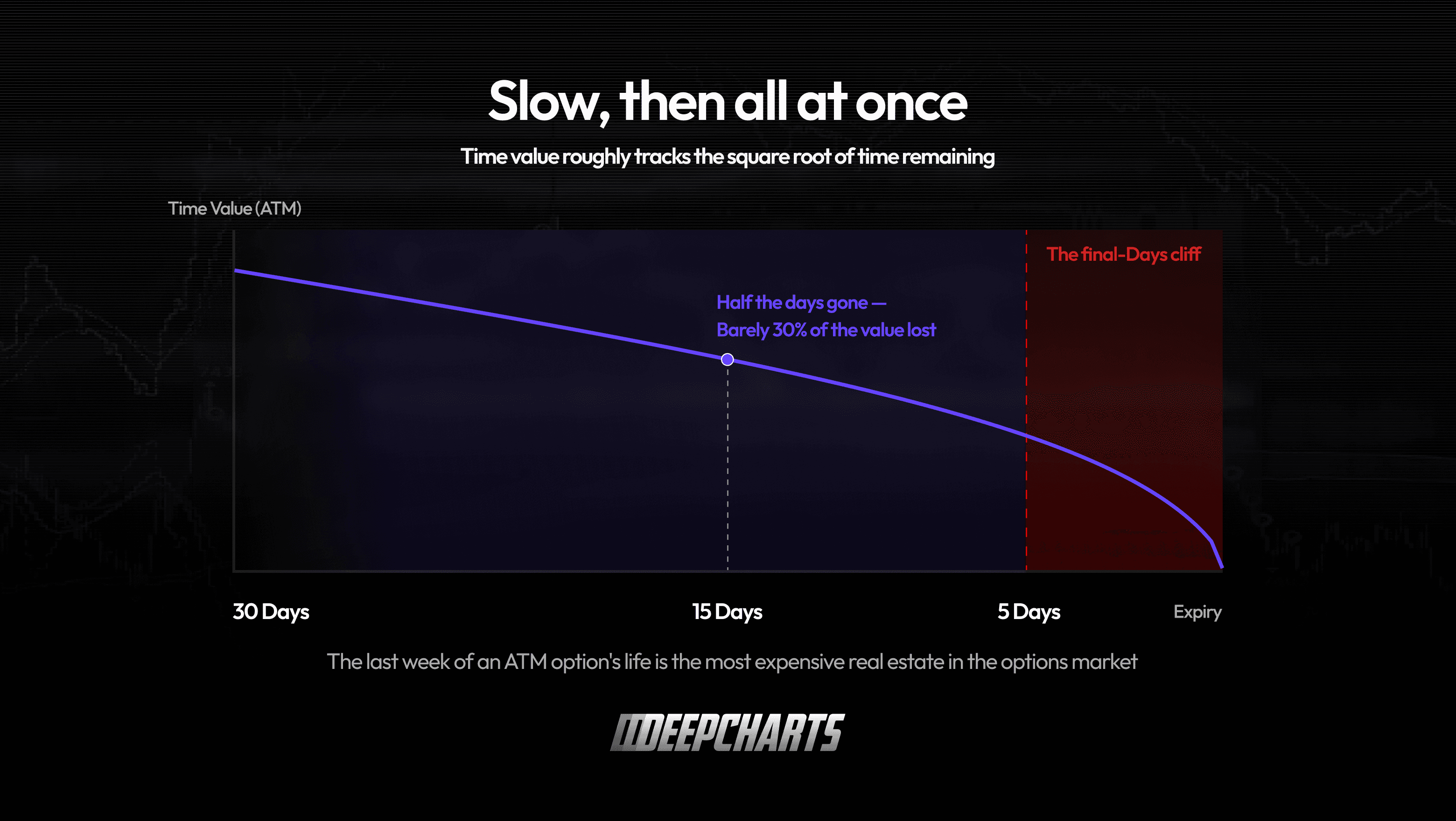
Figure 2 · The decay curve
And moneyness bends the path. At-the-money options save their steepest decay for the end. Out-of-the-money options do their melting earlier — by the final days there’s almost nothing left to lose. In-the-money options barely feel theta at all, because most of their price was never possibility to begin with.
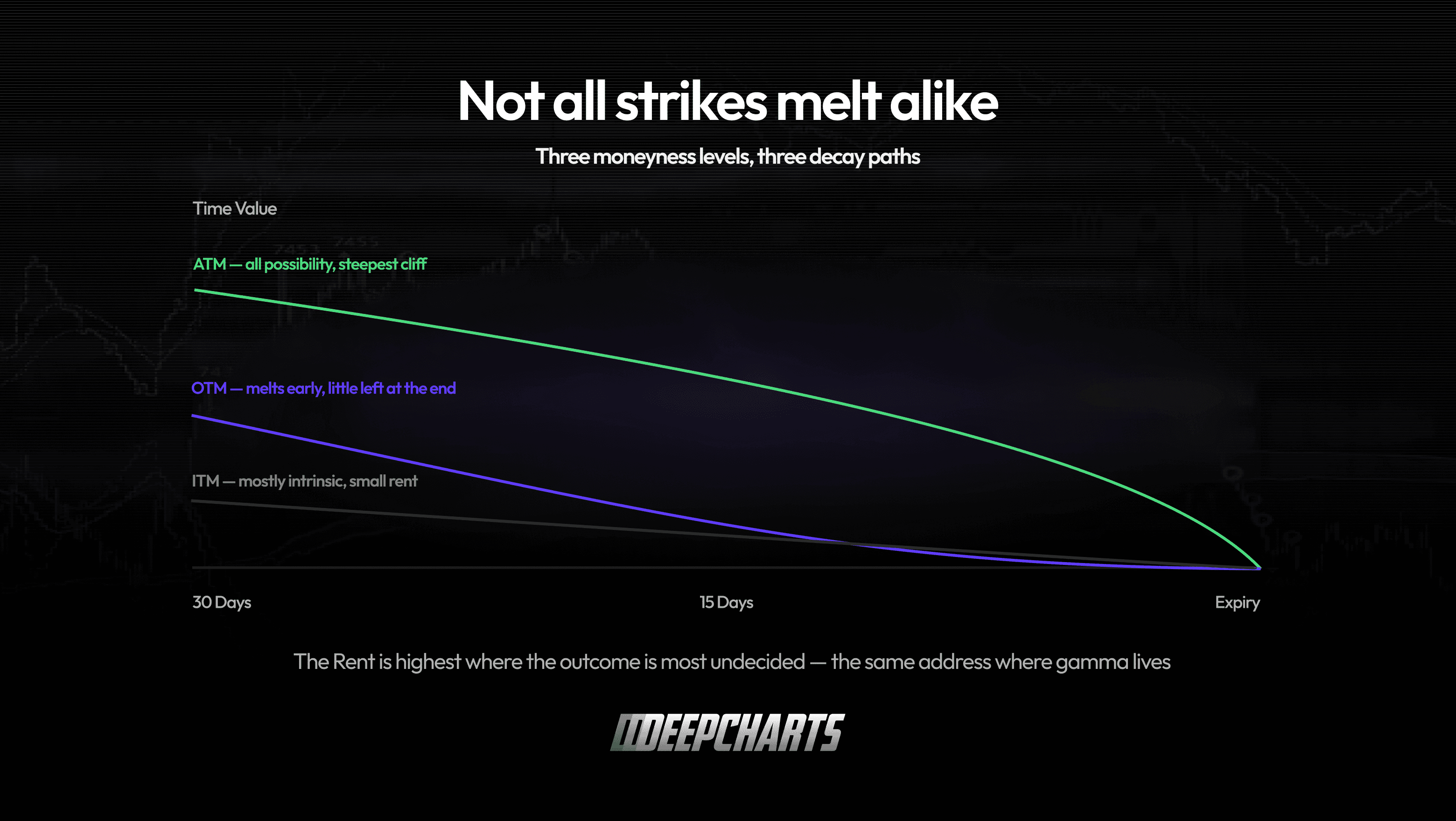
Figure 3 · Not all strikes melt alike
The exchange rate: rent for acceleration
Here’s the deep structure of the whole options market, in one sentence: theta is what you pay for gamma.
Long options: you own the acceleration — exposure that grows when the market moves your way, shrinks when it doesn’t. That asymmetry is a gift, and gifts get priced: you pay for it daily, in theta. Short options: you collect the rent, every day, rain or shine — and in exchange you owe the acceleration, which means you’ve agreed to be wrong-footed by big moves, automatically.
There is no configuration that gives you both. No position collects rent and owns acceleration; none pays rent and is safe from the big move. When someone shows you an options strategy that “wins either way”, one of these two meters is running somewhere in the fine print. Find it.
This is also why theta doesn’t deserve its villain reputation. The rent isn’t a defect in options — it’s the fair price of the asymmetry. The question is never “how do I avoid theta”; it’s “am I getting enough acceleration for the rent I’m paying?” — or, on the other side, “enough rent for the acceleration I’m owing?”
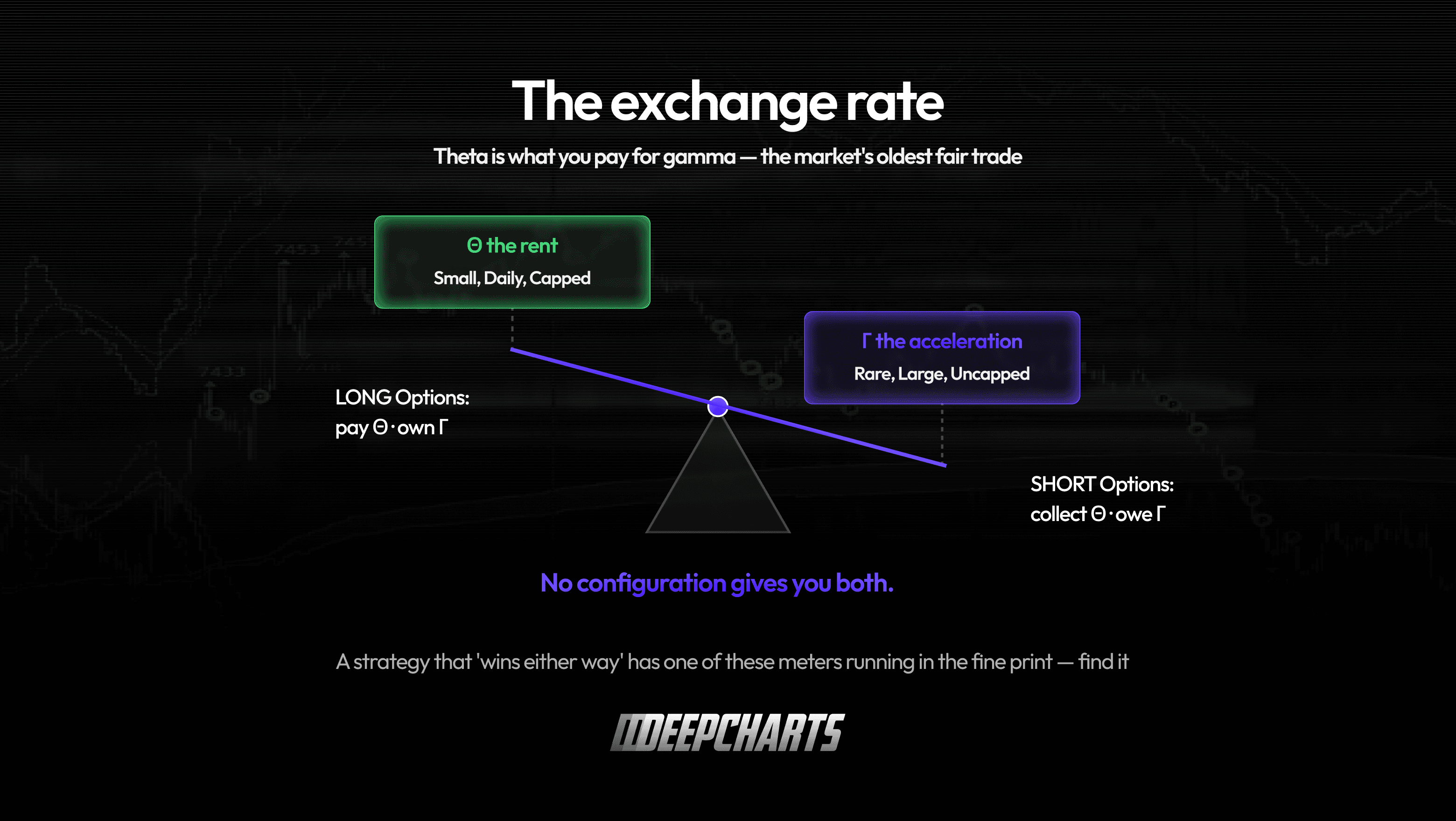
Figure 4 · The exchange rate
One week of rent, in numbers
Make it concrete. Take an at-the-money option in its final week, worth 10.00 on Monday, all of it time value. Day by day — index frozen, volatility frozen — it might read: 10.00, then 8.90, then 7.70, then 6.30, then 4.50, then zero at Friday’s close. The daily bill: 1.10, 1.20, 1.40, 1.80, 4.50. Same option, same strike, and the rent nearly quadruples inside a week.
Two honest footnotes. First, these are model numbers — clean-room decay with everything else frozen. In live markets price and volatility move too, and a 30-point rally will happily bury a day of theta (that entanglement between time, volatility and delta has its own Greeks — vanna and charm — and their own episode soon). Second: markets don’t sleep on the math. Weekend decay tends to get priced in before the weekend — Friday afternoon quotes already lean on Monday. The calendar melts smoothly even when the clock doesn’t.
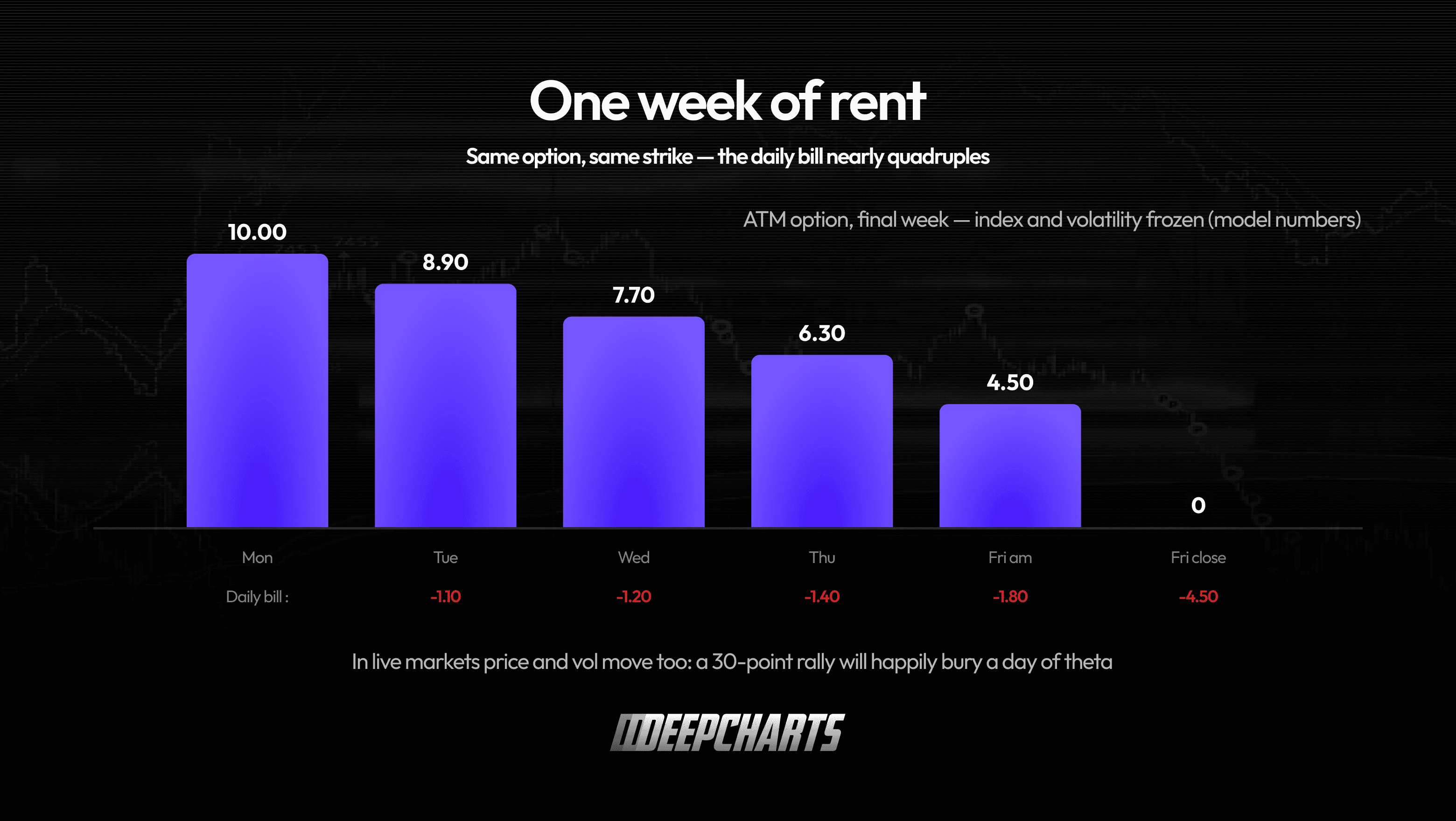
Figure 5 · One week of rent
Is collecting theta free money?
Selling options — “harvesting theta” — has a permanent cult following, and the pitch writes itself: collect rent every day, win whenever nothing happens, and most days nothing happens. All true. Here’s the rest of the sentence: the seller collects a small, capped rent in exchange for an uncapped obligation — short gamma at exactly the strikes and moments where gamma bites hardest. Most days the rent clears. On the wrong day, the acceleration owed can hand back weeks of collected rent at once. That’s not a scandal, it’s the deal: the rent is the compensation for carrying that risk. Sellers aren’t cheating, and buyers aren’t being robbed — they’re on opposite sides of a fairly priced exchange of rent for acceleration.
The 0DTE boom is this exchange at maximum speed: the fastest rent in the market, against the sharpest gamma in the market, settled by dinner.
Which raises the obvious question: if the risk is real, why has selling it been systematically paid? The answer sits upstream of theta.
Why the rent runs rich: IV vs. RV
The rent’s level isn’t set by the calendar — it’s set by a price: implied volatility (IV), the market’s quote for how much movement to expect between now and expiry. Sell an option and you’re selling insurance priced off IV. What decides whether the trade actually works is realized volatility (RV) — the movement that then shows up.
Here’s the market-structure fact this section exists for: on index options, over long samples, implied volatility has tended to sit above the volatility that subsequently realized. The insurance has traded rich relative to the storms. That persistent gap has a name — the volatility risk premium — and it’s the reason systematic option selling can be a business rather than a coin flip. Sellers aren’t just collecting time; they’re collecting the markup between the movement that was priced and the movement that tends to arrive. Theta is simply the daily installment in which that markup gets paid out.
Why would a gap like that survive in a competitive market? Because the buyers aren’t naive — they’re structural. Look at who owns the equity market: pensions, insurance funds, asset managers, founders and corporates sitting on enormous appreciated positions. When they get nervous, the textbook answer is “sell some equity”. In practice, selling has costs no option desk charges them: realized capital-gains taxes on years of appreciation, broken mandates, the market impact of moving size, career risk. So the big holders often don’t sell — they rent protection instead: buying index puts and collars, rolling them quarter after quarter, largely regardless of price. It’s cheaper, fiscally and institutionally, to pay a rich premium than to book the sale.
Persistent, price-insensitive demand for insurance keeps the insurance rich. And rich insurance needs an insurer: the systematic option seller is the counterparty warehousing that fear, and the IV−RV gap is the wage. The insurer from Episode 1 was never a metaphor — it’s a job description, and this is the salary structure.
Two honest footnotes before anyone resigns to sell puts for a living. First, the premium is an average: it’s harvested in ordinary months and handed back — with interest — in the violent ones. RV overtakes IV exactly when it hurts most, and the wage exists because someone has to stand there when it does. Second, taxes are one driver among several — mandates, position size and crash memory all push the same direction. The direction of the flow is what matters: structural buyers of protection on one side, compensated warehouses of tail risk on the other, and a gap in the middle that shows up, one theta at a time, in the seller’s account.
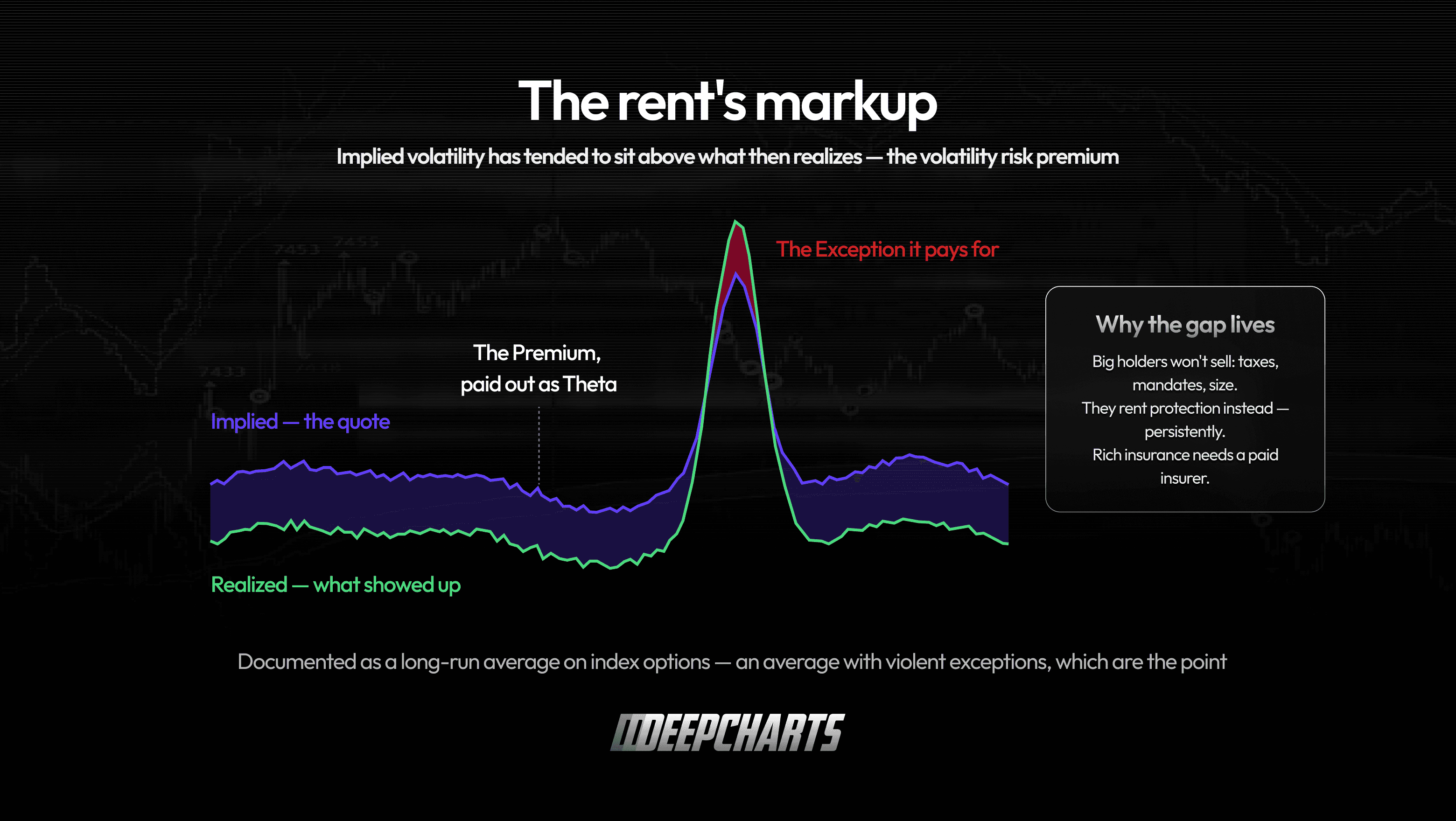
Figure 6 · The rent’s markup
Why futures traders care
Theta itself never prints a single futures contract — decay is silent. But its consequences aren’t.
Decay retires hedges. Every option that melts toward expiration drags its delta with it (out-of-the-money deltas bleed toward zero as time passes — that drift is charm, and it’s coming in a later episode). Dealers hedging those options must unwind as the exposure evaporates — mechanical adjustments that land, as always, on the futures tape.
Expiration clears the board. When a large slice of open interest decays to zero and expires — the monthly OPEX being the loudest case — the exposure it created is removed, rolled or replaced, and the hedging landscape can change shape quickly. The sessions after a big expiration are worth watching for that reason: as context, not as a directional signal.
And the rhythm matters. The market’s premium sellers are, structurally, its rent collectors — and therefore its gamma debtors. Knowing when the rent is richest — short-dated, at the money, into event days — tells you when those players are most active, and when their forced hand from Episode 3 is most likely to show up in the flow. Tendencies to verify on the tape, as always. But now you know whose clock is ticking.
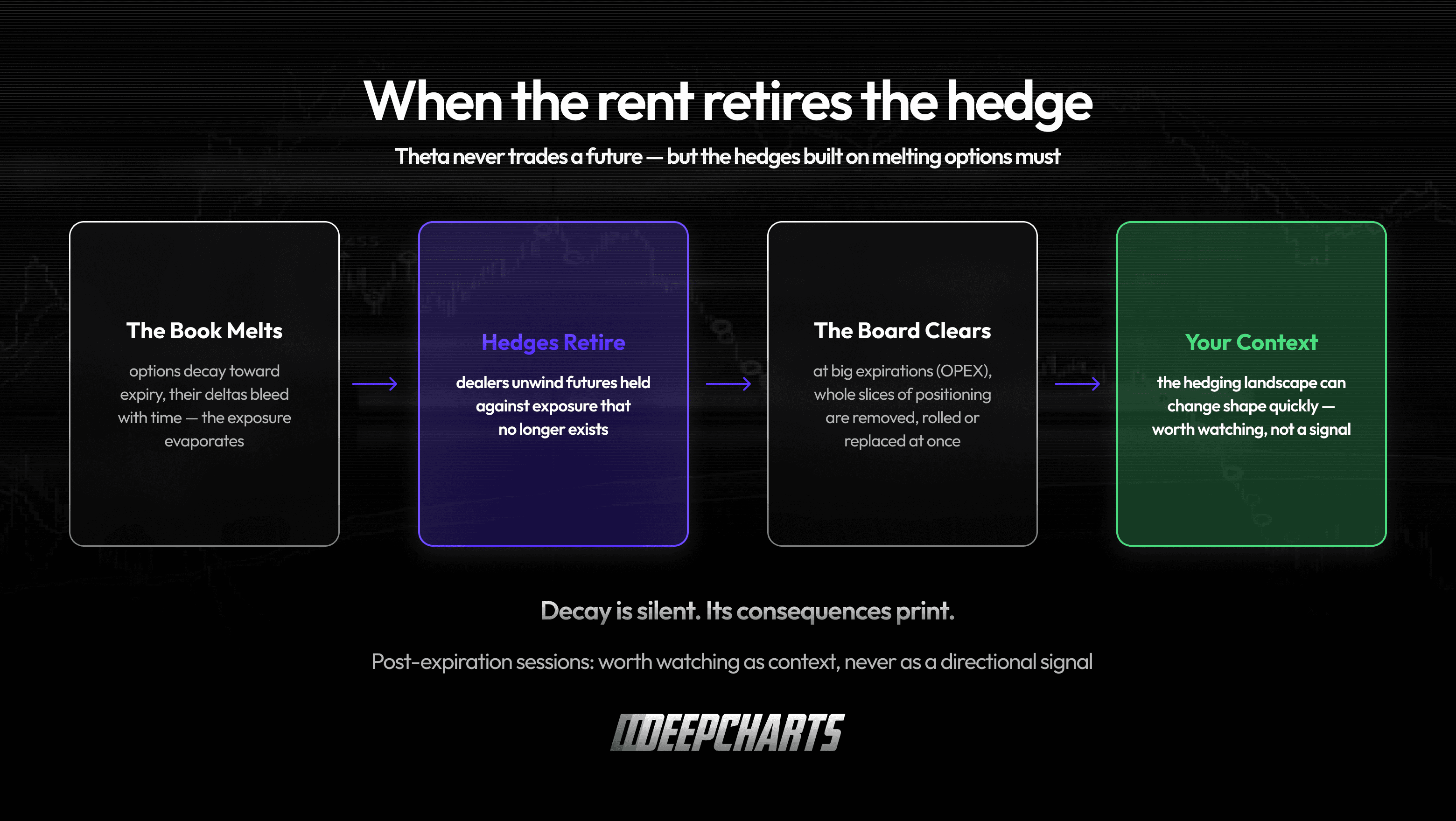
Figure 7 · When the rent retires the hedge
FAQ
What is theta in options, in simple terms?
Theta is how much value an option loses per day, all else equal. A theta of −0.45 means the option is worth about 0.45 points less tomorrow if price and volatility don’t move. It’s the daily rent of holding possibility.
Why does theta accelerate near expiration?
Because time value roughly tracks the square root of time remaining: each passing day removes a bigger fraction of what’s left. For at-the-money options, the final days are the steepest — the same window where gamma peaks.
Do options decay over the weekend?
The calendar says yes, and by Monday the weekend’s time value is gone. In practice markets tend to price it in ahead — Friday quotes already lean toward Monday — so the melt is smoother than the calendar suggests.
Is selling options for theta free money?
No. The seller collects a capped rent in exchange for owing gamma — an uncapped obligation that bites hardest exactly when markets move most. The rent is compensation for that risk, not a loophole. Most days it clears; the wrong day can return weeks of rent at once.
Why is implied volatility usually higher than realized volatility?
Because demand for protection is structural. Large holders often won’t sell appreciated positions — capital-gains taxes, mandates, market impact — so they buy index puts instead, persistently and somewhat price-insensitively. That demand keeps option prices rich, and the resulting IV−RV gap (the volatility risk premium) is the seller’s wage for warehousing tail risk. It’s a long-run average with violent exceptions, not a guarantee.
Does theta affect futures markets?
Indirectly: as options decay and expire, the hedges built against them are unwound, and large expirations can reshape dealer positioning quickly. Those mechanical adjustments land on index futures — context worth knowing, not a signal.
Episode 5: convexity — the bend in the payoff that all this rent is actually buying.
Deepcharts Team
·
Share this on
