Updated:
Tipi di dati di input per gli indicatori
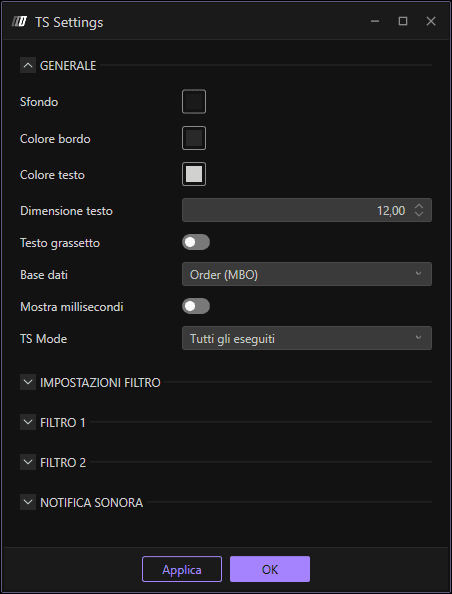
Quando apri le impostazioni di qualsiasi indicatore e vai su Impostazioni dati, troverai un campo chiamato Dati di input. Sono disponibili diverse opzioni ed è importante comprenderle tutte per configurare correttamente l’indicatore.
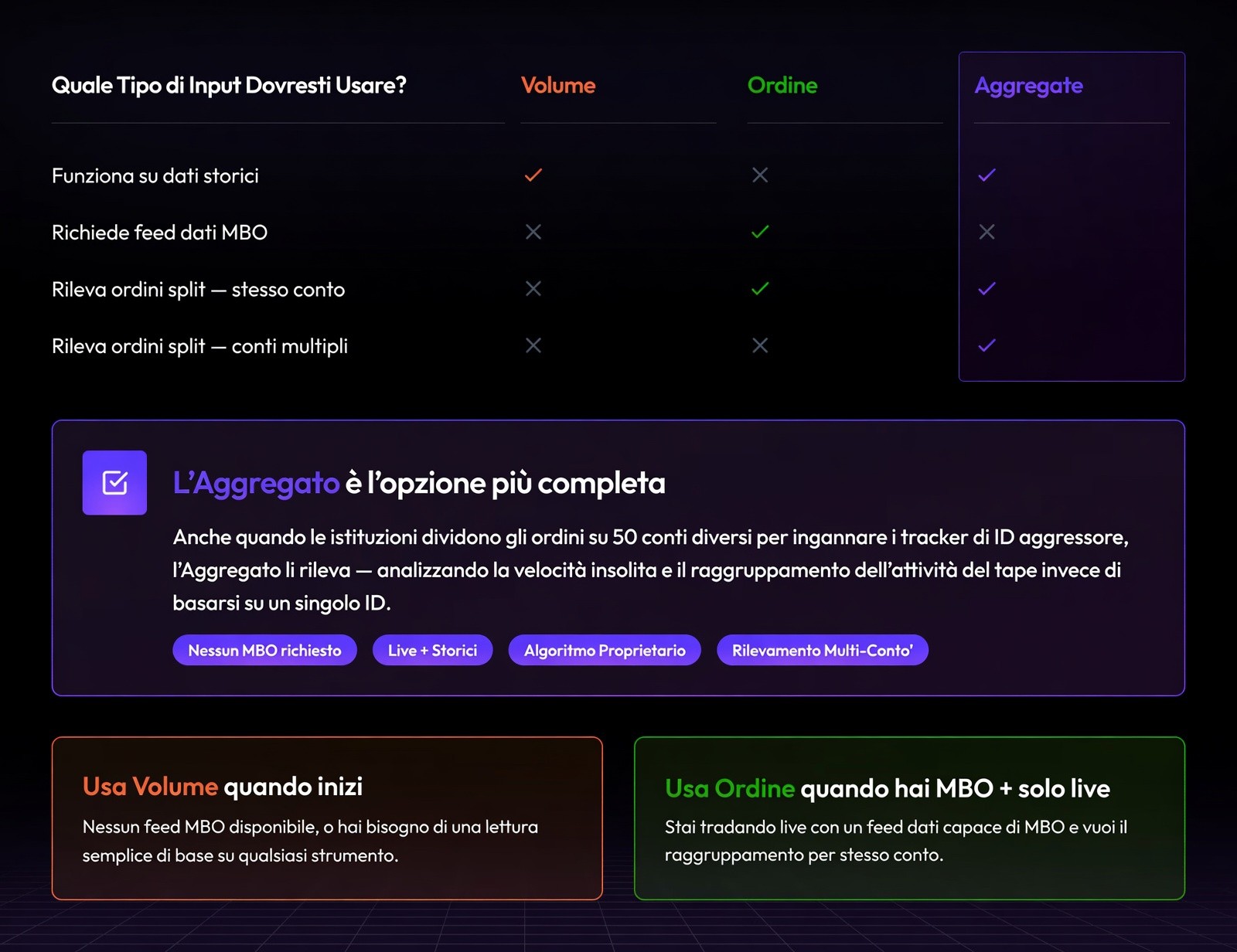
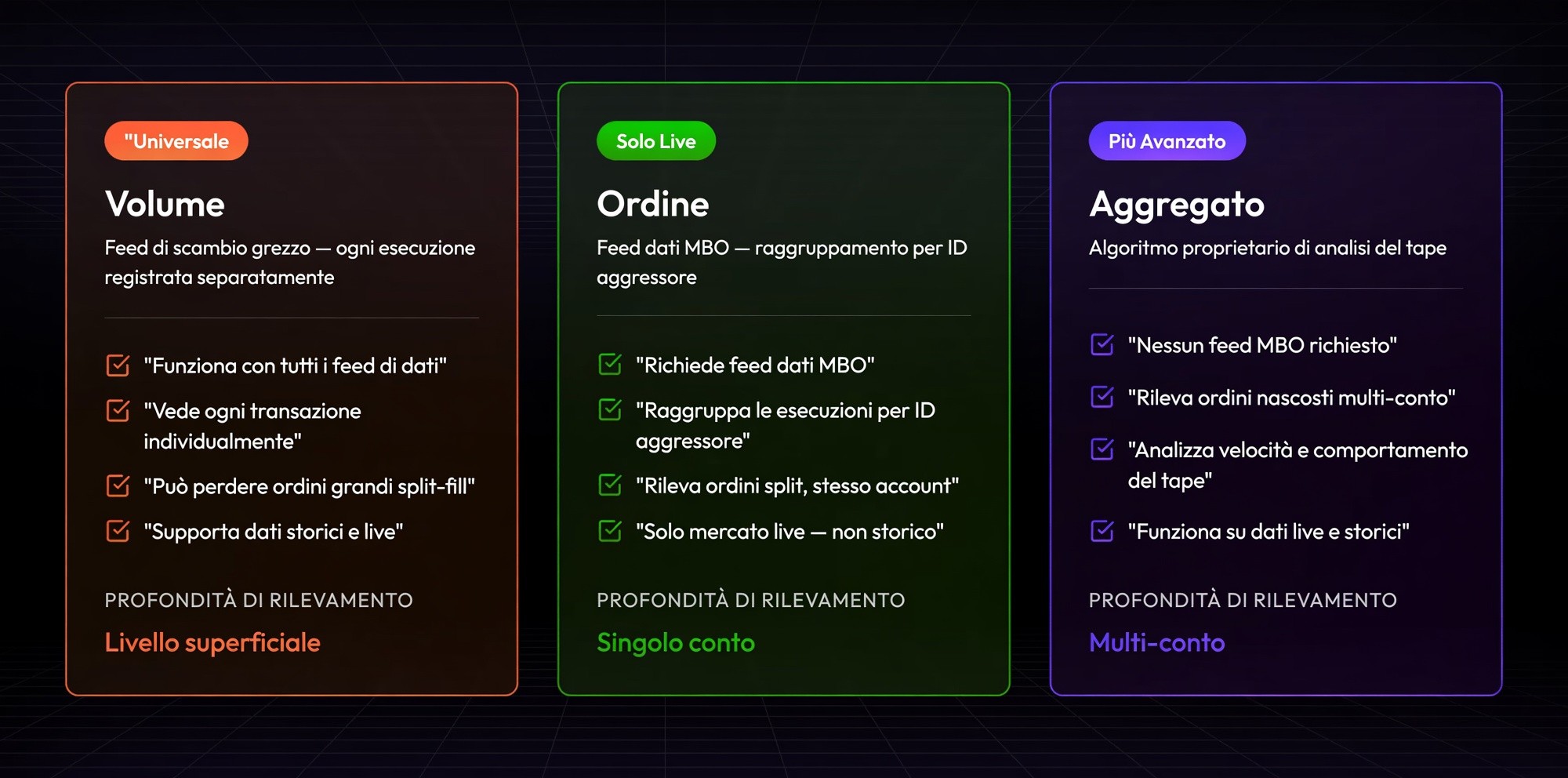
I tre principali tipi di dati di input sono: Volume, Ordine e Aggregato.
1.Tipo Volume
Si tratta di dati grezzi sulle transazioni di compratori e venditori passivi e aggressivi provenienti dall’exchange. Supponiamo che i dati di input del tuo indicatore siano impostati su Volume. A un certo livello di prezzo, ci sono 30 contratti offerti da venditori passivi nel book ordini. Tuttavia, questi 30 contratti provengono da tre venditori diversi — 10 contratti ciascuno.
Quando un compratore aggressivo entra nel mercato con un ordine a mercato per 30 contratti, consumerà quei 30 contratti, ma il feed di dati grezzi lo registrerà come tre transazioni separate (10 contratti ciascuna).
Ora, immagina di utilizzare un indicatore Big Trades con la dimensione minima dell’ordine impostata a 30. Poiché il trade da 30 contratti è stato eseguito come tre transazioni separate da 10 contratti, l’indicatore le ignorerà, considerandole tre trade più piccoli invece di un’unica esecuzione di grandi dimensioni.
2.Tipo Order
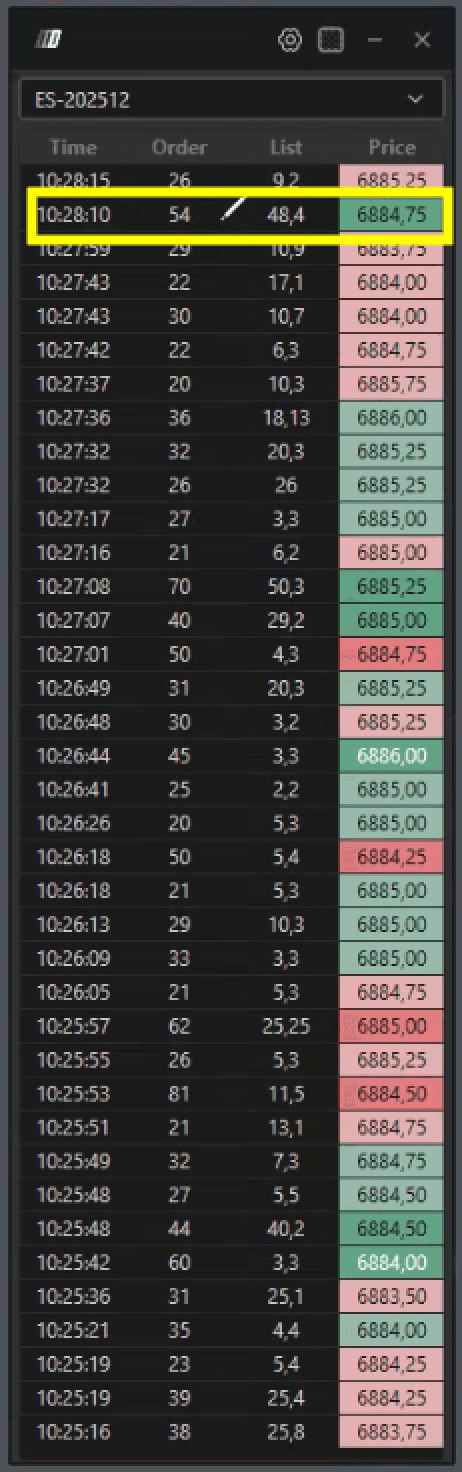
Il tipo di input Order funziona solo con feed di dati che forniscono dati MBO (Market by Order). Se imposti i dati di input su Order, nella finestra Advanced Time & Sales noterai una colonna chiamata List
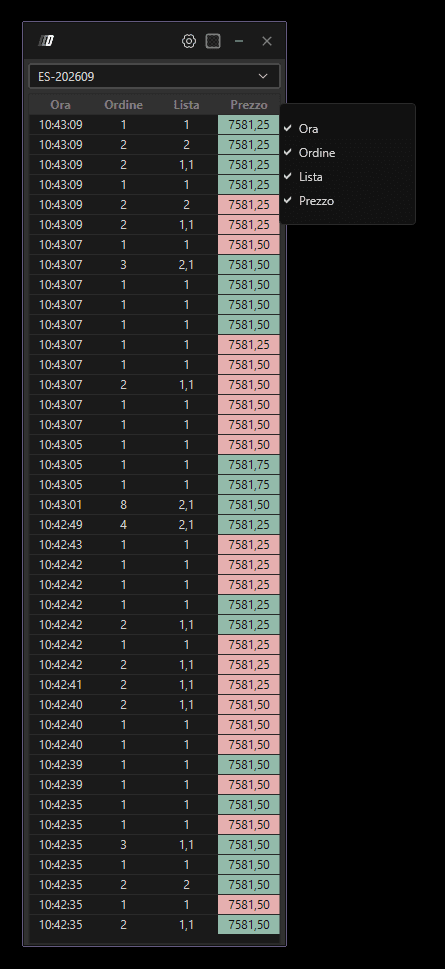
La colonna List mostra i due ordini passivi più grandi che sono stati consumati da un aggressore. Ad esempio, nell’immagine qui sotto, possiamo vedere una riga evidenziata che mostra un ordine aggressivo da 54 contratti. I due ordini passivi più grandi che ha consumato erano da 48 e 4 contratti, mostrati nella colonna List.
Per capire questo, nota che le grandi istituzioni spesso suddividono i loro ordini in molti più piccoli per restare nascoste al mercato. Ad esempio, invece di inviare un unico grande ordine a mercato da 500 contratti, potrebbero eseguire 100 ordini separati da 5 contratti ciascuno.
Nei mercati futures, le commissioni si basano sulla quantità negoziata, non sul numero di ordini, quindi per loro entrambi i metodi costano lo stesso.
Quando ciò accade e stiamo usando tipi di dati grezzi come Volume o Order, il nostro indicatore potrebbe non cogliere il fatto che questi 100 piccoli ordini rappresentano un’unica grande operazione. Tuttavia, se impostiamo il tipo di dati di input su Aggregato, DeepCharts analizza i dati delle transazioni e può ricostruire quel grande ordine nascosto.
lo fa identificando che tutti quei 100 trade più piccoli condividono lo stesso ID aggressore, consentendo a DeepCharts di dedurre che appartengono a un unico ordine madre da 500 contratti.
3.Tipo Aggregate
Il tipo di input Aggregate non è fornito direttamente dal feed di dati — viene calcolato da DeepCharts e questo tipo di input non richiede di avere un feed di dati che fornisca dati MBO (Market by Order), quindi può essere utilizzato con qualsiasi feed di dati.
qui i dati sono calcolati in base alla velocità del tape e alle transazioni di Trade